A Little Reassurance First
If you’ve ever wondered whether underwear fabric really matters—yes, it does. But not in the complicated, expensive way the internet wants you to think.
The Numbers Don’t Lie
Here’s something most people don’t know: up to 75% of women will experience a yeast infection at least once, and recurrent infections affect nearly 8% of women. Research in the Journal of Lower Genital Tract Disease found that women wearing synthetic underwear had significantly higher rates of vulvovaginal symptoms compared to cotton wearers.
Your underwear touches your most sensitive skin for 12+ hours daily. It matters.

What’s Actually Happening Down There
Your vagina maintains a delicate pH balance (3.8-4.5) that keeps harmful bacteria and yeast in check. Moisture, heat, and lack of airflow disrupt this balance.
Synthetic fabrics like polyester and nylon trap moisture, increase temperature, and reduce breathability—creating the perfect environment for infections, irritation, and ingrown hairs.
A Personal Story: The Lace Thong Rebellion
In my early twenties, I was convinced “sexy underwear” meant uncomfortable underwear. After my third yeast infection that summer and a 12-hour hospital shift where I genuinely considered going commando in my scrubs, I threw out half my underwear drawer.
Plain cotton briefs changed everything. Infections gone. Comfort restored. Sometimes the best medical education comes from your own poor choices.
What Actually Works
Fabric Matters Most:
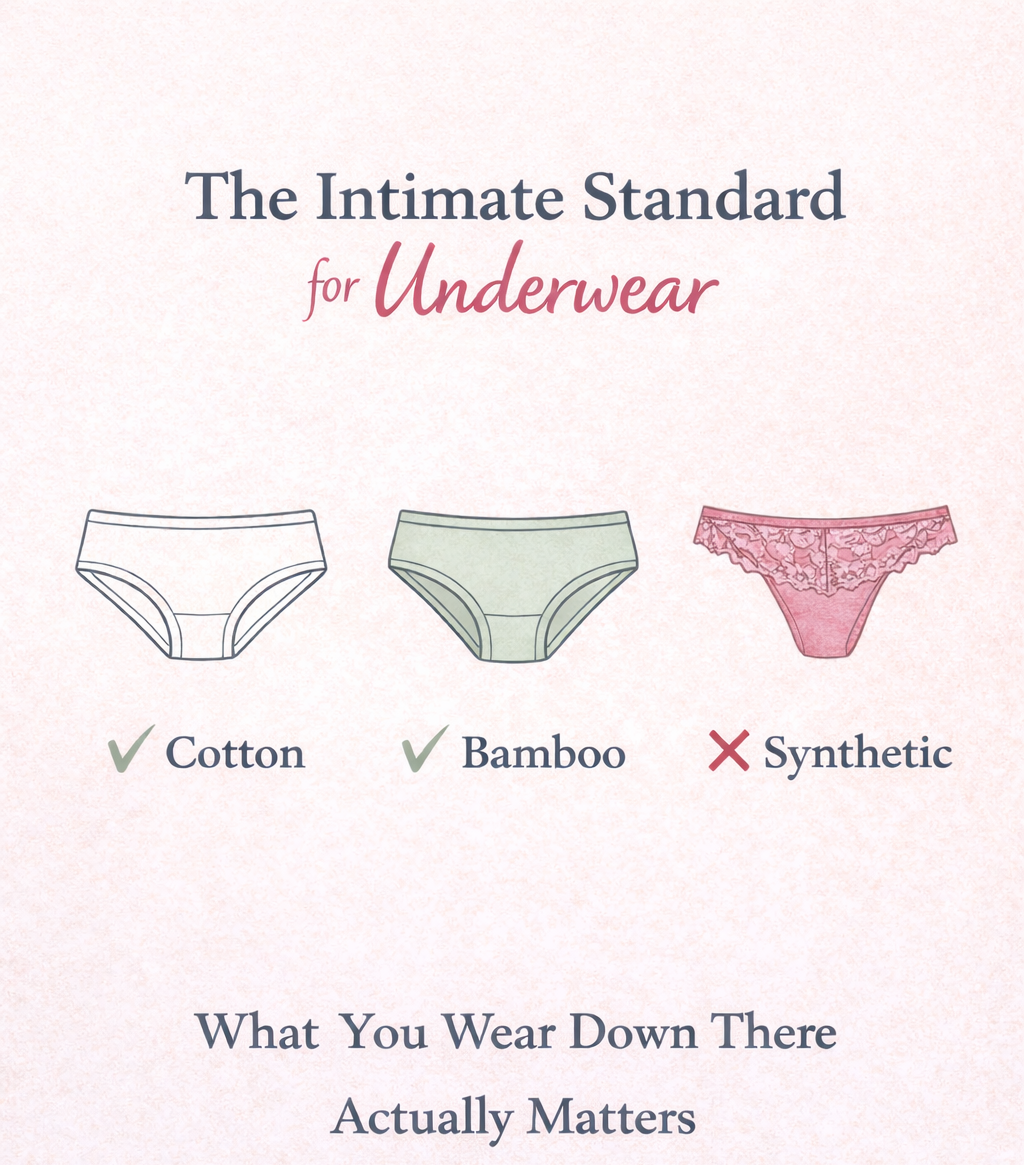
- ✅ 100% cotton (or cotton gusset minimum)
- ✅ Bamboo or modal (breathable alternatives)
- ❌ Synthetic fabrics (polyester, nylon, heavy spandex)
Fit Guidelines:
- ✅ Comfortable coverage without digging in
- ✅ Smooth seams, proper rise
- ❌ Daily thongs (increase bacterial transfer risk)
- ❌ Shapewear as everyday underwear
Special Circumstances:
- During periods: Cotton is even MORE important
- After workouts: Change immediately
- At night: Go commando (gives your vulva airflow)
- Post-hair removal: Stick to cotton for 24-48 hours
Your Action Plan
Do This:
- Change daily (and after sweating)
- Wash in fragrance-free detergent, skip fabric softener
- Replace every 6-12 months
- Go commando at night several times a week
Avoid This:
- Wearing synthetic underwear if you get recurrent infections
- Sleeping in tight underwear every night
- Thongs immediately after hair removal
- Ignoring discomfort

Let’s Be Real About “Sexy” Underwear
Lace and lingerie for special occasions? Absolutely fine. But if your everyday underwear makes you uncomfortable or contributes to infections—that’s not a trade-off worth making.
Confidence is sexy. Yeast infections are not.
The balance: Cotton daily, whatever makes you feel great for special occasions.
Final thought
Your underwear doesn’t need to be complicated or expensive. It just needs to work for your body.
The standard: Cotton, comfortable, changed daily, breathable at night.
If you’re dealing with recurrent infections or irritation, switching to cotton is one of the easiest, cheapest changes you can make. Give it 2-3 months.
Your intimate health deserves attention. Start with what’s literally closest to your skin.
Want More Real-Talk Intimate Health Education?
Subscribe to The Intimate Standard’s weekly newsletter for evidence-based tips on vaginal health, hair removal, periods, and everything else people are too uncomfortable to Google.
No fluff. No shame. Just facts from a physician who gets it.
With care,
Dr. Joan A.
Physician & Founder, The Intimate Standard
Leave a Reply